

Coding the singular
Slow Down, Count Later: How Phenomenology Teaches Us to See Before We Measure

Late on a drizzly Thursday in Morningside Heights, a graduate student sits in a coffee shop, hunched over a printout dotted with fluorescent stabs of yellow. The highlighted line—Max van Manen’s (2017) tidy thunderbolt, “Phenomenological analysis does not involve coding, sorting, calculating, or searching for patterns”—has already ruined her day. Coding and sorting are the first tricks she was taught; patterns are the grail of every term paper. Yet here is one of the modern guardians of Husserlian phenomenology insisting that the whole enterprise is a losing proposition.
At first pass, van Manen seems to be calling for intellectual free verse: follow an experience until it sings, don’t march it into analytic formation. That posture feels odd in the data-hungry present, where social scientists count Instagram posts to forecast elections and fit line graphs over our every move. But phenomenology, born in the early twentieth century out of Edmund Husserl’s insistence on describing experience as it shows itself, has always prized the fresh sting of life over the comfort of category.
Still, phenomenologists do talk about “eidetic structures,” those bedrock arrangements that, they claim, undergird all experience. If boredom (remember that?) can be traced, from a subway stall to a corporate meeting, to the same drag on one’s inner sense of time, then some deep pattern must be afoot. How, then, can phenomenologists ban talk of patterns on Monday and welcome universal structures on Tuesday? And what is a well-meaning social scientific researcher to do with beloved spreadsheets and datasets once the edict arrives?

My own problem is personal. I traffic in what I call relevances: each of us, standing at our private here-and-now, decides what to notice (that’s thematic relevance), how to make sense of what’s noticed (interpretive relevance), and why any of it matters at all (motivational relevance). I argue, perhaps somewhat loftily, that these three beams of attention sit at the transcendental heart of meaningful action. In the next breath I tell students we can chart relevance configurations in workplaces, protests, or multiplayer games. Can something be both transcendental and empirically trackable?
The way out of the cul-de-sac begins with acknowledging that “pattern” can mean more than one thing.
Start with van Manen himself. Phenomenology is all about the unique and the singular. But what he detests, I think, is the premature strait-jacketing of a living scene. One of his cases is boredom. Picture a bored child stranded in a school hallway watching the second hand creep across a clock’s face (clearly a 20th century image, though smartphone bans at schools might be changing that). Van Manen doesn’t count how many children hate recessless Tuesdays; he wants to linger closely that the reader feels the hallway air thicken. The result isn’t a statistical regularity but a little flash of revelation: boredom’s essence is elastic time, stretched thin and strangely weighty. The pattern, if we insist on the word, is eidetic—an innermost structure that must be in play whenever anyone, anywhere, suffers the stall of time. You don’t need notes from a thousand diaries to certify it; a single, well-rendered scene is enough.
Yet the most luminous scenes don’t stop scholars from wanting to compare. Enter Diane Vaughan (with whom I once had the privilege of sharing the stage at an SSHA panel), the Columbia sociologist who spent much of the 1990s marinating in NASA memos to understand why the space shuttle Challenger exploded. The more she dug in, the more she heard echoes of a single choreography: ambiguity arises, small deviations are redefined as normal, trouble brews, no one hits the brakes. In Vaughan’s hands, taken with a wink from the old German magister Georg Simmel, the comparison isn’t about shared variables but shared form. Different settings, same skeleton. She calls the maneuver analogical theorizing; Simmel, with dour precision, spoke of “formal sociology.”
For all their formal flair, both van Manen and Vaughan keep one foot in narrative clay. A third vision of pattern steps further back, squints, and plots entire fields at a time. If you’ve drifted through Pierre Bourdieu’s pages, you know the drill: social life is a space of positions, and the game is won or lost by how those positions line up. Correspondence analysis, a geometric method popular among French statisticians, takes big tables of counts (months by retail sectors, say) and spits out a map. On one such map, December looms beside department stores, miles away from grocery aisles. Never mind that grocery sales spike in December; department stores spike more. Data is relational, not absolute. The pattern here is topological—distance and proximity, clusters and gaps, rather than a tidy list of common traits or neat correlations. This seems closer to the phenomenologist’s rather than the empiricist’s perspective of the world.
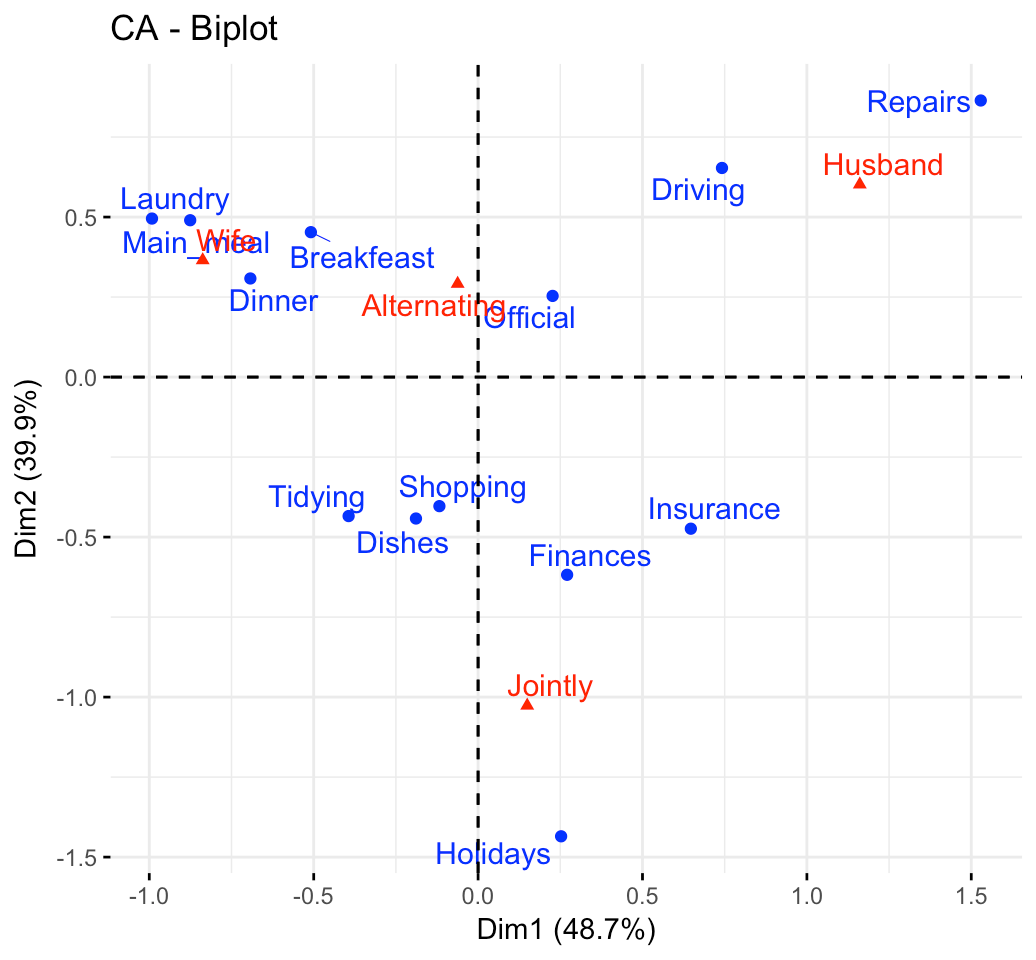
Fig. 1. Example of correspondence analysis chart (image source).
Now bring the three visions back to the riddle of relevances. Phenomenologically speaking, every conscious act needs a deictic center—someone or something inhabiting a “here” and “now.” From that spot, intentional rays shoot out: What should (the egological) I notice? How does (the egological) I name it? Why should (the egological) I care? Those beams are so fundamental that no amount of transcript coding can produce them; they lie there, quietly structuring every sentence before it forms. Yet what they illuminate is extremely variable. An ICU nurse, ears ringing with a hundred false alarms an hour she is used to ignoring, worries she’ll miss the single alarm that matters. A software engineer staring at a 2 a.m. bug report wonders whether her work-life boundary is just a fiction. Same tripod of relevances, different photographic subjects.

Does that tripod travel? Vaughan’s style of comparison says yes. Take NASA engineers gaming out a shuttle launch, Brooklyn tenants fussing over rent hikes, and a guild of gamers plotting tonight’s dragon raid. Each crew decides what demands attention (theme), how to frame it (interpretation), and whose skin is in the game (motivation). O-rings, broken elevators, the loot table inside a digital dungeon—the objects vary wildly, but the choreographic form repeats.
Once you’ve granted the deep structure and spotted its formal echoes, you can chart the day-to-day jostling of relevances. If you do like the ethnomethodologist and code every speech turn in that Brooklyn tenants’ meeting and feed the counts into correspondence analysis, the map should bloom. I imagine (since I am not an ethnomethodologist) that veteran activists might bunch in a quadrant bathed in motivational appeals to solidarity; newcomers may huddle around raw thematic complaints about broken elevators; legal volunteers, fluent in statute, float somewhere between. The map is not the entire territory, but it should let you glimpse the subtle gravity fields tugging each speaker’s words.
If those abstractions feel remote, the brief post-pandemic, pre-AI practice of “quiet quitting” offers a flesh-and-blood demo. The phrase, which roamed TikTok before leaping into business columns, names employees who refuse to answer Slack pings at midnight and doze off next to open laptops. Start phenomenologically: it’s 11:07 p.m., your child’s bedroom door clicks shut down the hall, your phone vibrates with the boss’s cheery “quick question.” A clash of motivational relevances erupts—company time against private time, ambition against sleep. This is not altogether new. Medieval monks, bound by the Rule of Saint Benedict, fought their own boundary wars, balancing manual labor and divine contemplation. Different centuries, similar formal problem. Finally, scrape a month of GitHub commit logs from a tech firm, cross-tab by hour and developer, and send the frequencies into a correspondence map. Night-owls in one corner, nine-to-five purists in another, weekend warriors somewhere off-axis—all taking their spots in the geometry of twenty-first-century labor. This is doing Bourdieu without Bourdieu—or rather, taking Bourdieu seriously but not always literally.
What’s at stake is not only one graduate student’s peace of mind but a wider question of method. Van Manen’s call against premature coding is best read as a plea for patience: don’t rush to categories before the scene has breathed its own air. A phenomenological vignette keeps us from wielding concepts like cudgel, imposing on the social world forms that seem to express no content. Only after the scene stands before us in its particularity does it make sense to ask, with Vaughan, whether its form rhymes with other forms, making analogies and comparisons possible. And once that rhyme is sure, a positional map can reveal the field’s internal tensions. Each layer disciplines the next. Phenomenology prevents comparison from devolving into cheap typologies (already plentiful in the social sciences); formal comparison rescues phenomenology from anecdotal narcissism (really the antithesis of phenomenology!); geometric mapping keeps both from ignoring structure altogether, and identifying structure is what most of us social scientists live and die for.

Clarity about layers also forestalls overreach. The deictic tripod of relevances is transcendental: there is no human action without it. The NASA-Brooklyn-gamer echo lies at a middle range—robust but absolutely defeasible by counter-cases. The correspondence map of tonight’s tenants’ meeting is contingent, as ephemeral as the next landlord’s memo. Treat contingent patterns as transcendental, and you’re guilty of metaphysical inflation; treat transcendental structures as mere empirical findings, and you sell philosophy short. As social scientists, we want to be somewhere in between.
Looping all this back to practice grounds the exercise. Suppose the ICU-alarm study, after mapping, shows that boredom-saturated shifts cluster when nurse-to-patient ratios spike past a certain number. Administrators, suddenly alert, can adjust staffing or redesign the alarm system. Geometric insight becomes policy lever, but only because phenomenological description reminded everyone that what’s at stake is not a line on an error chart but a beating human heart.
Phenomenology, then, doesn’t forbid pattern; it teaches us to stagger our appetites, to let experience speak before we reduce it to count and graph. A structure of manifestation, a formal echo across unlikely domains, a geometry of positions—these are not rival claims but neighboring dialects in the language of social life. When we let each do its work in turn, we hold on to the grain of the real while still daring to generalize, which—I very strongly believe—is the task of social science. The grad student in the café may sulk at having to shelve her color-coded Excel sheet for a day or two, but she’ll come back to it, perhaps armed with scenes that breathe, forms that travel, and a map that surprises. Somewhere between Husserl’s radical attentiveness to eidos and an analyst’s statistical itch, the social world waits, patterned and alive.
Select References
Bourdieu, Pierre. 1984. Distinction: A Social Critique of the Judgment of Taste. Cambridge: Harvard University Press.
Vaughan, Diane. 1996. The Challenger Launch Decision: Risky Technology, Culture and Deviance at NASA. Chicago: University of Chicago Press.
Vaughan, Diane. 2020. “Analogy, Cases, and Comparative Social Organization.” In Theorizing in Social Science: The Context of Discovery, edited by Richard Swedberg, 61–84. Redwood City: Stanford University Press.
van Manen, Max. 2017. “Phenomenology in Its Original Sense.” Qualitative Health Research 27 (6): 810–825. https://doi.org/10.1177/1049732317699381